

Chief investigators
- Markus Wagner, Monash University (Lead)
- Phil Beadle, GridGuru Solutions
Purpose of project
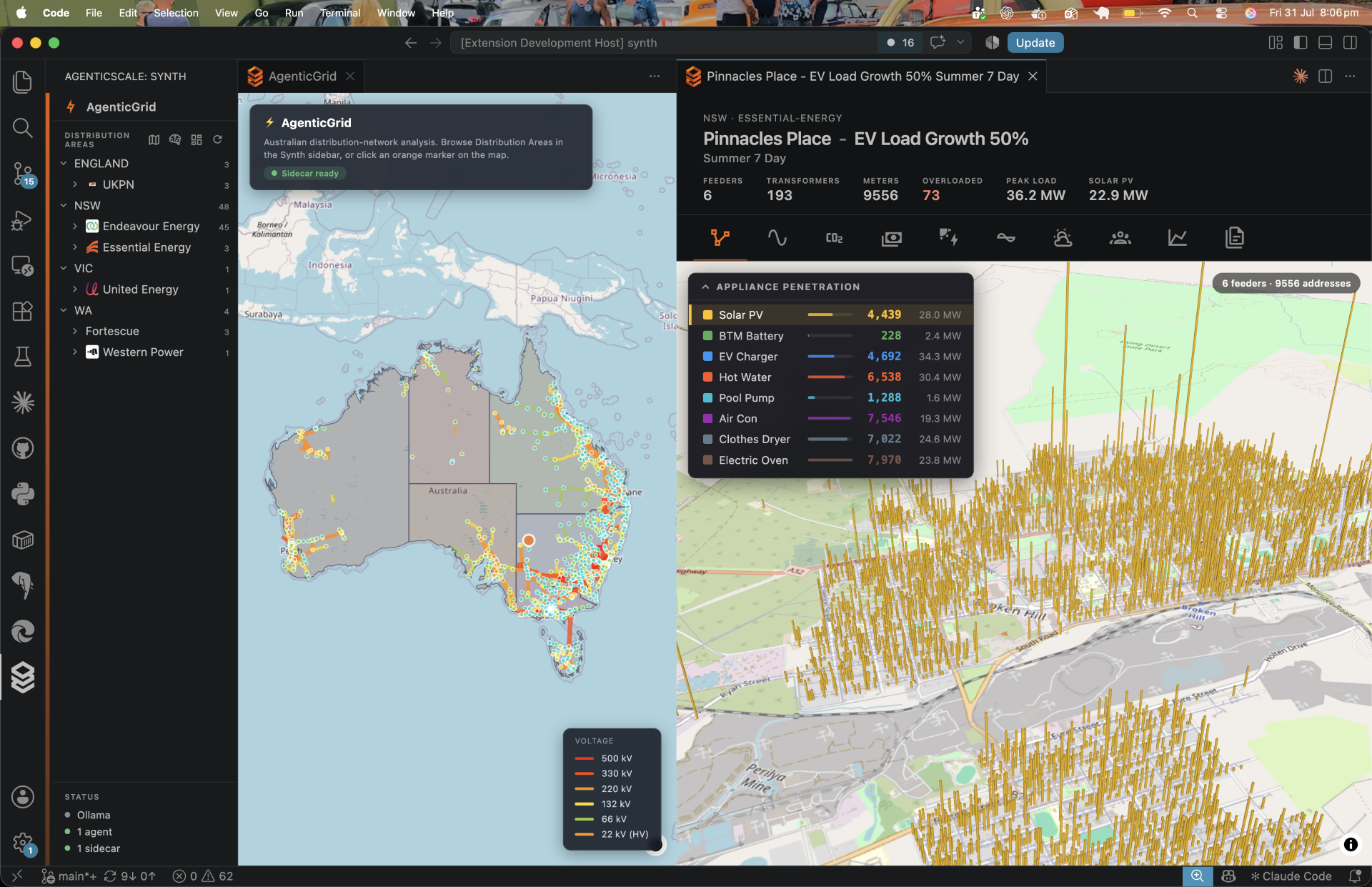
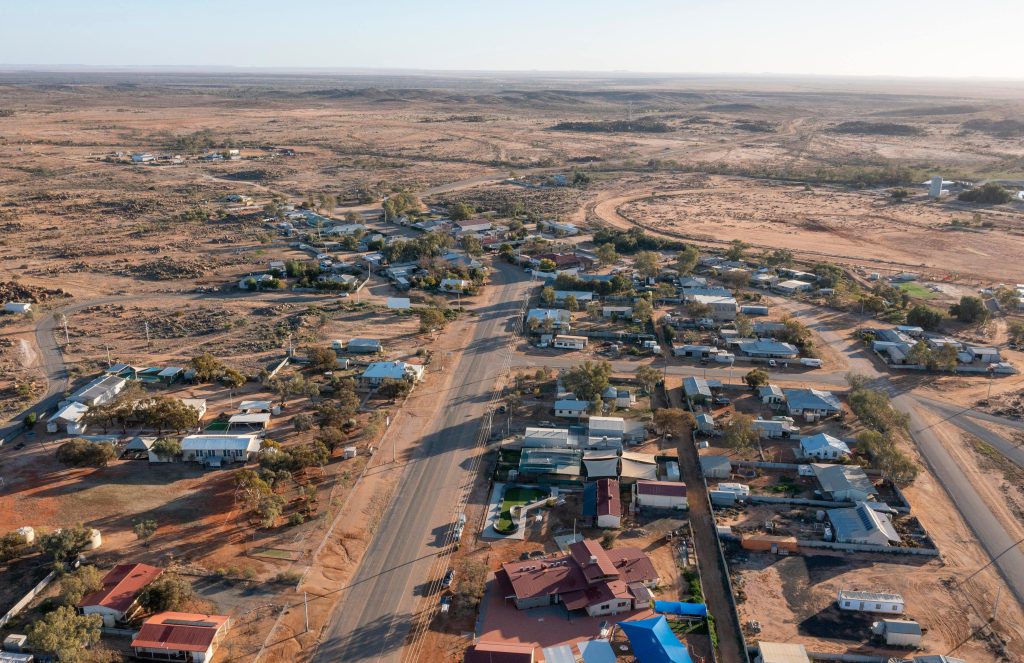
- Remote and edge-of-grid feeders like Tibooburra and Ivanhoe carry real voltage, reliability and cost-to-serve pressure, yet are the hardest parts of the network to model — conventional planning studies are slow and expensive to run for small, isolated townships.
- This project proves that AI-assisted digital-twin modelling can build a feeder-level network model of these townships from DNSP-supplied topology and consumption data, and produce indicative sizing for battery storage, solar PV and back-up generation — faster and at lower cost than a conventional study.
- It rides on the success of the earlier AgenticGrid.ai project, “Breaking the barriers with AI-assisted energy modelling”, extending the method from proof-of-concept to a named, real-network case study inside Essential Energy’s distribution area.
- A limited set of seasonal and stress scenarios is run to demonstrate feasibility and sensitivity — this is an indicative proof of concept, not a bankable engineering design or a full RIT-D.
Impact of project
- Demonstrates a repeatable, low-cost method to build feeder digital twins directly from a DNSP’s own topology + interval-consumption data.
- De-risks investment decisions for off-grid / edge-of-grid communities by quantifying the BESS / solar-PV / back-up-generation trade-offs under real load.
- Gives Essential Energy a transferable template that can be re-pointed at the many other remote feeders across its network.
- Strengthens the regulatory and cost-benefit case for non-network solutions, aligned to AER CBA Guidelines — a stepping stone toward RIT-D-grade assessments.
- Further identifies grid-optimisation opportunities at the distribution level.
Project partners



Status
- In Progress
Completion Date
July 2026
Project Code
1116
Related Projects
In Progress
Data requirements to optimise CER/DER benefits
Chief investigators David Roche, UTSDr Rob Passey, UNSW Purpose of project Impact of project Project partners

In Progress
Collaborative energy transition at North Queensland Bulk Ports
Image provided by North Queensland Bulk Ports Chief Investigator: Genevieve Mortimer (UTS (Climate KIC/ISF)) Purpose of project The Collaborative Energy Transition Project for North Queensland Bulk...
In Progress
Community and regulatory perspectives on microgrids
Chief Investigators Dr Mike Roberts (UNSW) Purpose of project The project is focused on exploring the development of connected and islandable microgrids within the...

In Progress
Energy Masters
Chief Investigators Prof. Peter Pudney (Adelaide University) Research Project Manager Dr Kirrilie Rowe, Adelaide University Purpose of project Energy Masters is trialling smart, flexible...