


Cheif investigators
Prof. Liam Smith, Monash University
Scott Bocskay, Property Linked Finance Accelerator
Purpose of project
This project tests how Australian consumers understand and respond to Property Linked Finance across both settings, and whether this model could help shift home energy upgrades from a niche activity into something the mainstream market can deliver.
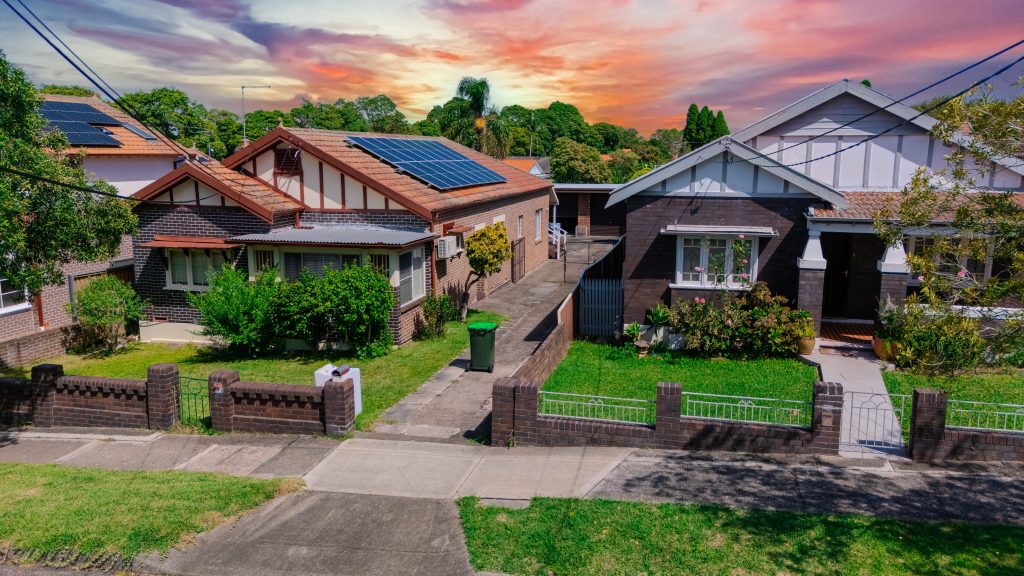
Most of the homes Australians will be living in by 2050 have already been built (currently around 11 million houses in Australia). Projects for new homes, linked to forecasts of population growth, estimate that another 2.2 – 2.8 million homes will be built between 2026 and 2050.[1]
One of the most important things we can do to cut emissions and reduce energy bills for the country and all households is to upgrade these with higher levels of insulation, efficient electric heating and cooling appliances and solar panels.
The major barrier for both new and existing homes is often paying for energy efficiency upgrades during a cost-of-living crisis. While these improvements can save thousands of dollars over their life-time, many people cannot afford to pay upfront or take on more debt when they are already under financial pressure.
Personal loans, green loans and government subsidies can help, but rely on the borrowing capacity of individual households. This creates a mismatch for long-life building upgrades, where costs are immediate, but benefits build up over many years and may extend beyond the current occupant.
Alternative finance models like Property Linked Finance (PLF) is one solution as the cost of the upgrades is linked to the property, not the person.
Instead of a personal loan, repayments are made over time through a statutory charge on the land, collected alongside council rates. This means the upfront cost stays with the home, not the owner, which is a much better fit for long-term improvements where the benefits last decades and may extend beyond the current occupant.
Delivered through mechanisms such as Environmental Upgrade Agreements, PLF has the potential to unlock new private investment and reduce upfront cost barriers for households.
But its ability to scale depends on building a market large enough to attract that investment, and right now, there is limited evidence on whether Australian consumers understand or accept this model. The retrofit market currently remains too small and fragmented for that, but new home purchases offer a different entry point: higher volume, more standardised, and potentially easier to scale.
Impact of project
Property Linked Finance can only attract the private investment needed to scale if there is evidence of consistent consumer demand, and right now that evidence does not exist. This limits the confidence of governments, lenders and industry to move forward.
This project will generate the first empirical evidence on whether Australian consumers understand, accept and would use PLF for home energy upgrades, across both retrofit upgrades and new home purchases.
The findings will inform policy and industry decisions about whether and how to take this model forward, supporting financing approaches that connect household decision-making with the requirements of scalable capital deployment.
By addressing a recognised evidence gap on consumer responses to alternative financing structures, the project contributes to ongoing policy and industry efforts to scale residential energy upgrades. The goal is more homes upgraded, lower energy bills and fewer emissions from Australia’s housing stock.
Work plan
This project will apply consumer research and behavioural sciences to understand how Australians make decisions about financing home energy upgrades.
It will test how people understand and respond to Property Linked Finance across two housing contexts: upgrading existing homes and purchasing new, high performing homes. The research will explore consumer trust, perceived value, acceptance and likely demand, including how Property Linked Finance compares with other payment and finance options.
Findings will help inform policy, industry and market design decisions for scaling home energy upgrades and supporting the delivery of new, high performing homes.
Project partners

Industry reference group members
Climate Bonds, ClimateWorks Centre, Commonwealth Bank, Energy Consumers Australia, Energy Efficiency Council, Green Building Council Australia, Green Finance Initiative, Henley Homes, Housing Industry Association, Master Builders Australia, Mornington Peninsula Shire, State Electricity Commission (Vic), Wyndham City Council
[1] 2050 population forecast: Zoomers to outnumber Boomers 4 to 1
Status
- In Progress
Enquiries
Earlier research
Completion Date
October 2026
Project Code
1101
Related Projects

Health impacts analysis for accelerating home energy upgrades of low-income housing
Chief investigator: Kerryn Wilmot, UTS ISFKellie Caught, ACOSS Purpose of project Poor and energy inefficient housing is associated with a wide range of health...
Australian home energy upgrades initiatives database
Chief investigator: Prof. Rob Raven (Monash University) Purpose of project Despite growing interest and policy support for residential energy efficiency, Australia lacks a comprehensive,...
Development and commercialisation of a novel domestic heat pump water heater (SolaTank)
Chief Investigator: Prof. Frank Bruno, Adelaide University Garry Baverstock, Director, Wise Earth Solar Technologies Purpose of project Impact of project Project partners Adelaide University (lead),...

Scaling up Structural Insulated Panels (SIPs) manufacturing production for Australian residential dwellings
Chief Investigator: Andrea Trianni (University of Technology Sydney) Brian Chandler (Sipform) Purpose of project Impact of project Project partners