
Chief investigator:
Prof. Rob Raven (Monash University)
Purpose of project
Despite growing interest and policy support for residential energy efficiency, Australia lacks a comprehensive, up-to-date knowledge base on the wide variety of local government and community-led home energy upgrade programs. Many such initiatives operate in isolation, with limited capacity to learn from one another or scale proven approaches. This fragmentation results in duplicated efforts, inconsistent program quality, and under-leveraged investment.
Key industry challenges this project addresses include:
- Fragmented knowledge and lack of coordination: There is no central resource cataloguing existing upgrade initiatives, delivery models, or their outcomes. Program organisers must often start from scratch, without access to comparable examples or proven approaches.
- Limited visibility of community-led innovation: Community groups and local governments often trial innovative models for financing, governance, and delivery, yet these are poorly documented and not widely shared, reducing opportunities for replication and scaling.
- Data gaps for policy and research: Without robust documentation of upgrade initiatives, it is difficult for policymakers and researchers to assess effectiveness, equity impacts, or policy alignment, which can hamper broader system change.
- Challenges in program design and delivery: Local program organisers face barriers in understanding what works in specific social, economic, and geographic contexts, particularly with respect to funding models, behavioural engagement strategies, and upgrade support mechanisms.
This project will develop a national database of approximately 60 community- and local government-led home energy upgrade initiatives across Australia. It will systematically document diverse program types, delivery models, and lessons learned, with a particular focus on financial incentives, governance approaches, upgrade support mechanisms, and outcomes. The database will address a major knowledge gap by providing a much-needed evidence base for program organisers, policymakers, and researchers to better understand and scale locally-led home energy upgrade efforts. As a key input to the RACE2030 Energy Upgrades for Australian Homes (EUAH) platform, the database will directly contribute to accelerating the uptake of energy upgrades and enhancing local capacity across Australia. By capturing enablers, barriers, and best practices, the project will help design more effective, equitable, and context-sensitive energy upgrade programs.
Impact of project
This project will generate a nationally significant, openly accessible evidence base that enhances the effectiveness, coordination, and strategic development of home energy upgrade programs in Australia. By systematically documenting approximately 60 initiatives led by local governments and community groups, the project enables program organisers, researchers, and policymakers to better understand and scale successful delivery models.
Immediate impacts include:
- Improved program design and delivery: Local governments and community groups will gain insight into proven implementation models, typical challenges, enabling conditions, and outcome pathways. This will support the development of more effective, inclusive, and context-responsive programs, ultimately improving energy performance, reducing household bills, and supporting climate resilience.
- Increased visibility and recognition: The database will raise the profile of innovative local government and community-led initiatives, helping them secure further funding or partnerships and legitimising their role in national energy transitions.
- Cross-sector learning and alignment: By facilitating knowledge sharing across geographies and delivery models, the database will foster collaboration between stakeholders who may otherwise operate in silos.
Strategic system-level impacts include:
- Enabling platform-based scaling: The integration of the database into the EUAH platform enhances the platform’s value and usability. It will support multiple work packages, including policy (WP1), delivery models (WP2), and platform and pilot development (WP6).
- Accelerated retrofit uptake: By making it easier to identify and replicate effective approaches, the project contributes to broader efforts to accelerate the uptake of home energy upgrades, aligned with the national goal of upgrading 1 million homes by 2030.
- Evidence base for policy and funding: Policymakers will benefit from comparative data on what works in different contexts, helping inform future program design, regulation, and investment.
- While the project does not directly deliver upgrades or emissions reductions, it plays a critical enabling role by strengthening the capability, coordination, and learning infrastructure of the sector.
Project partners

Related Projects

Consumer testing of Property Linked Finance to enable housing decarbonisation
Cheif investigators Prof. Liam Smith, Monash University Scott Bocskay, Property Linked Finance Accelerator Purpose of project This project tests how Australian consumers understand and...

Health impacts analysis for accelerating home energy upgrades of low-income housing
Chief investigator: Kerryn Wilmot, UTS ISFKellie Caught, ACOSS Purpose of project Poor and energy inefficient housing is associated with a wide range of health...
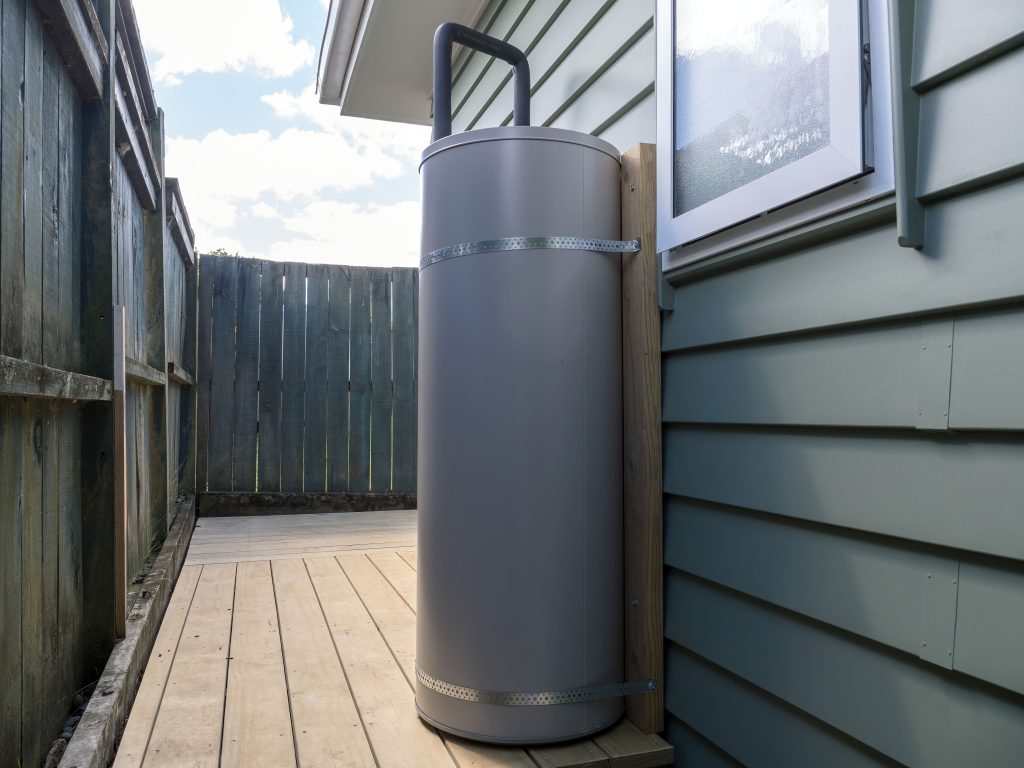
Development and commercialisation of a novel domestic heat pump water heater (SolaTank)
Chief Investigator: Prof. Frank Bruno, Adelaide University Garry Baverstock, Director, Wise Earth Solar Technologies Purpose of project Impact of project Project partners Adelaide University (lead),...
Scaling up Structural Insulated Panels (SIPs) manufacturing production for Australian residential dwellings
Chief Investigator: Andrea Trianni (University of Technology Sydney) Brian Chandler (Sipform) Purpose of project Impact of project Project partners